THEY'RE DYING TO GET IN HERE ·
THEY'RE DYING TO GET IN HERE ·
Of all the things that happen every day, this is one of the most invisible. Not because it's rare — a funeral home like this one processes bodies the way other businesses process paperwork, steadily, reliably, without fuss. Not because it's secret.
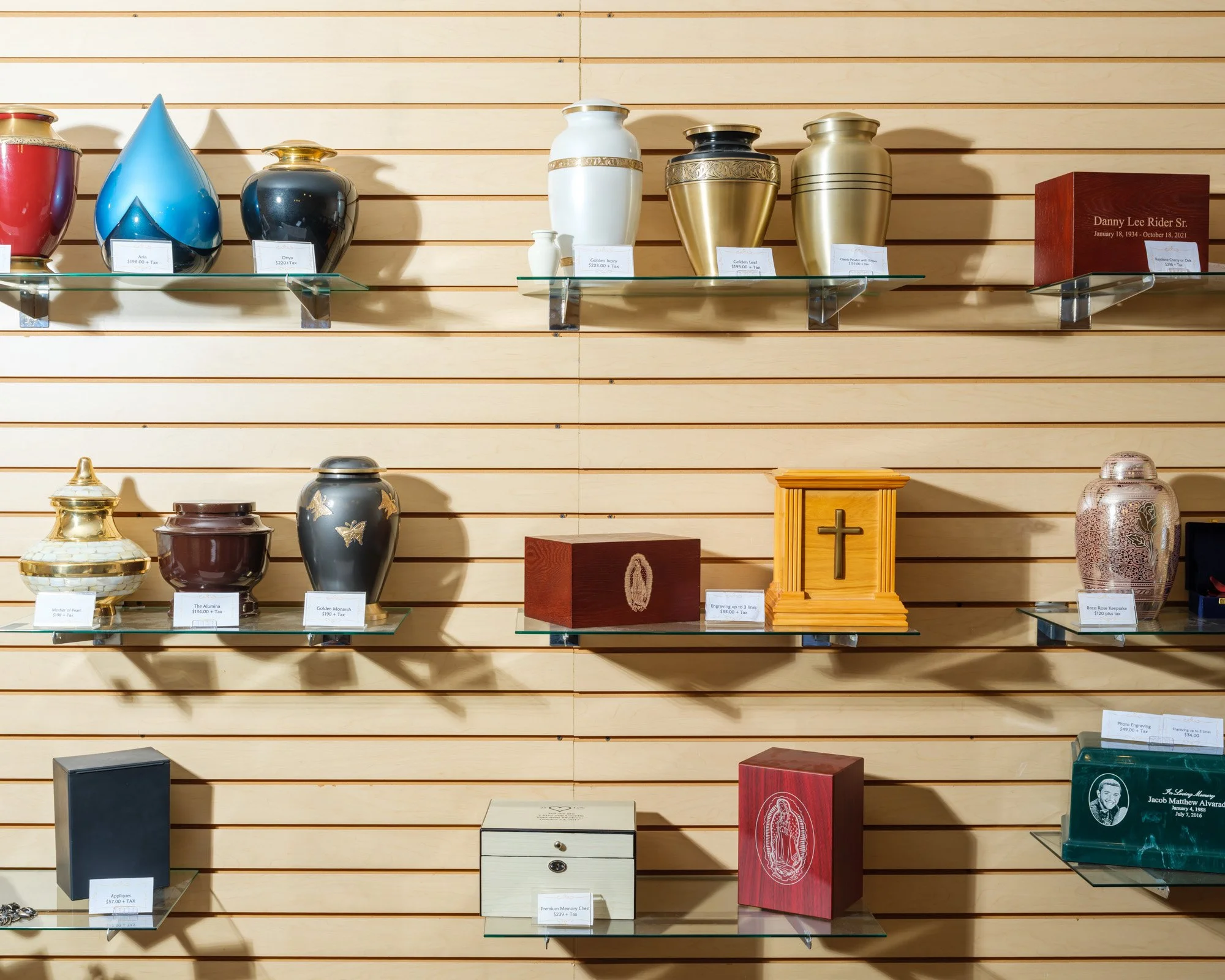
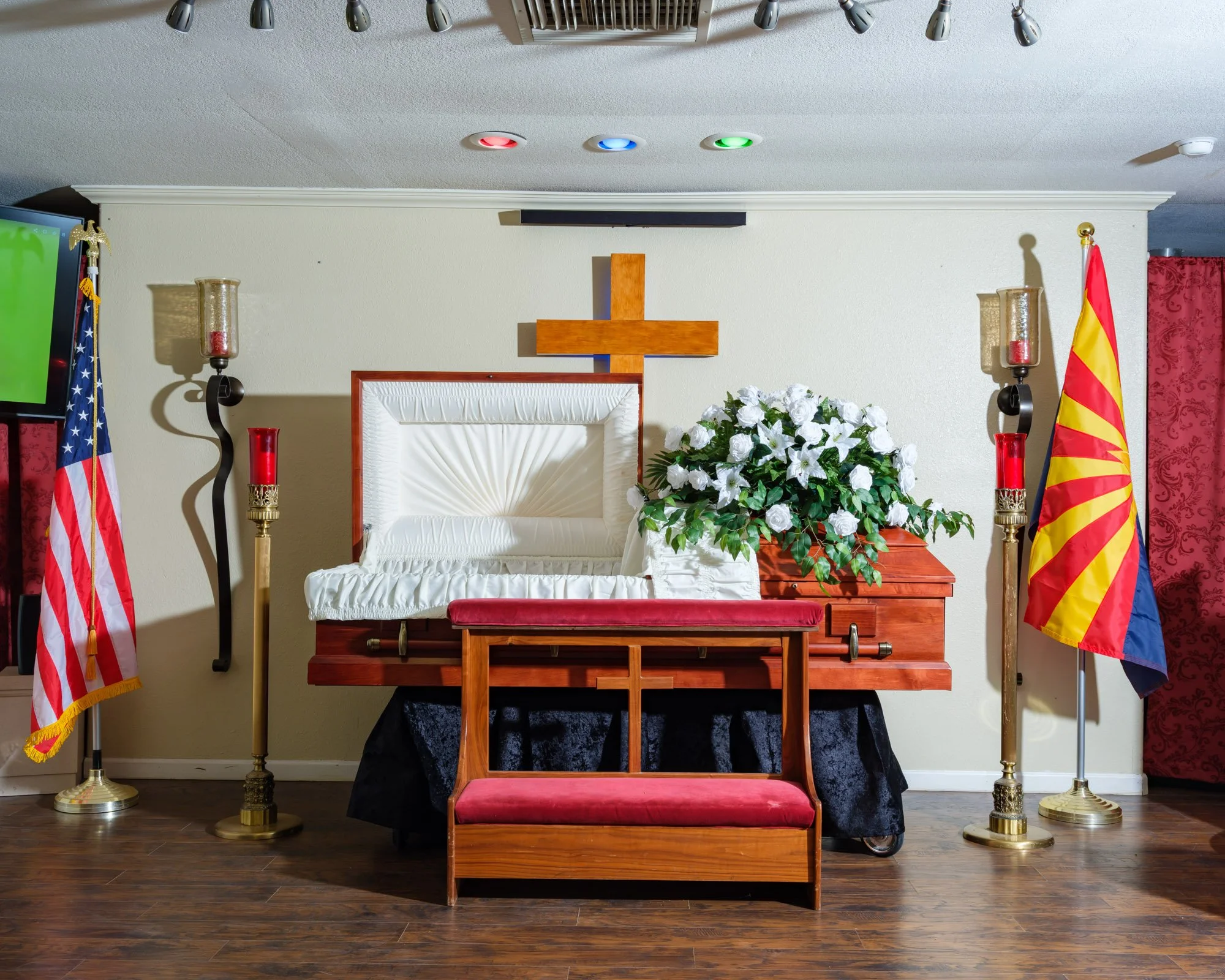
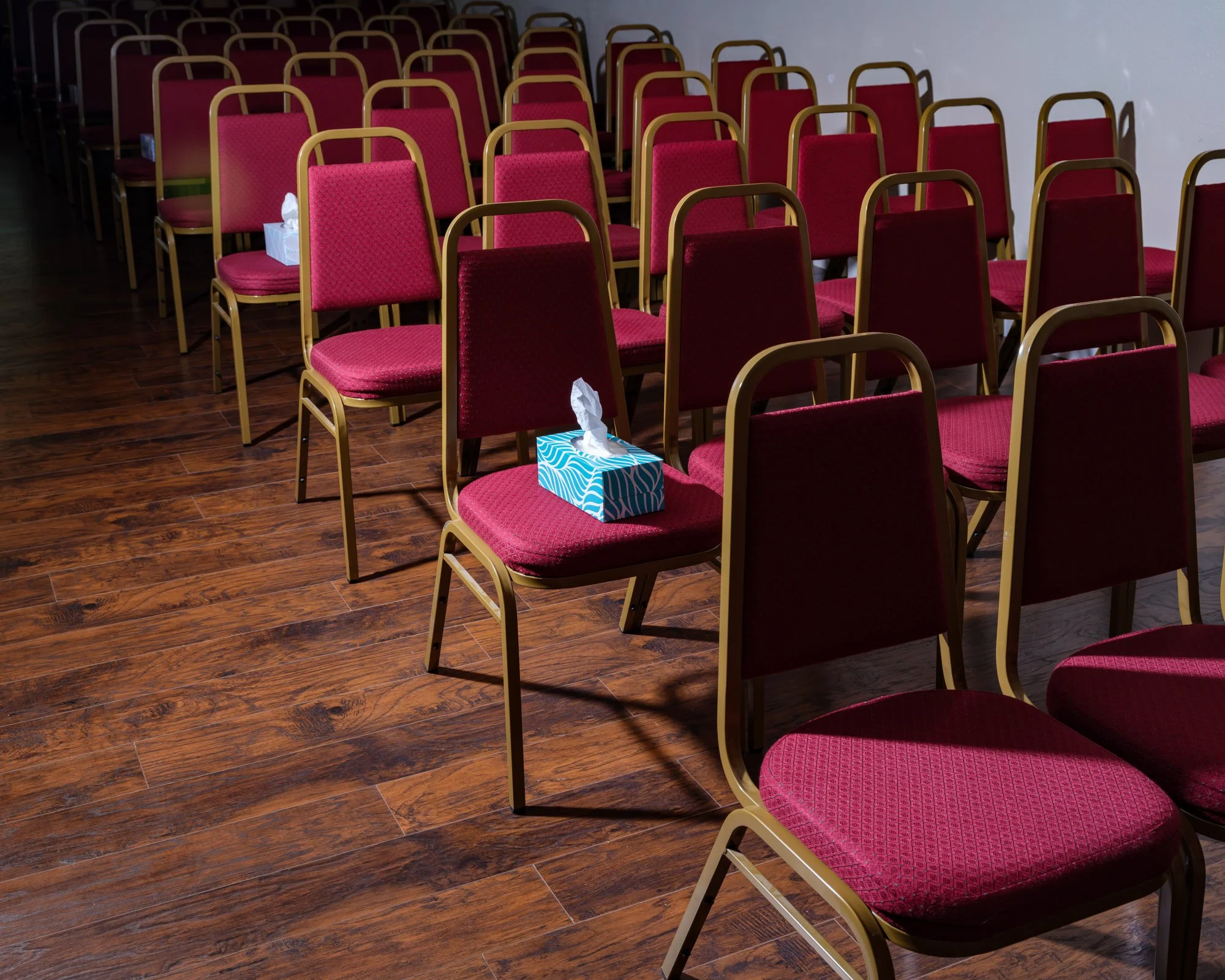
This is a series made inside an ordinary American funeral home — the embalming room, the crematory, the front office where families are received. People arrive. People leave. Arms and legs are massaged, faces are set, blood is replaced with fluid. Somewhere near you, right now.
The people who do this work clock in like anyone else, argue about whether to wear suits, take calls at 2am. They have simply chosen to stand on the side of the curtain that the rest of us spend our whole lives avoiding.
“We’re not suit and tie guys. I don’t like suits. I don’t wear suits. It puts families at ease when they come in to see you because they don’t have to look past the tie the Armani suit. They can just feel comfortable and relaxed.”
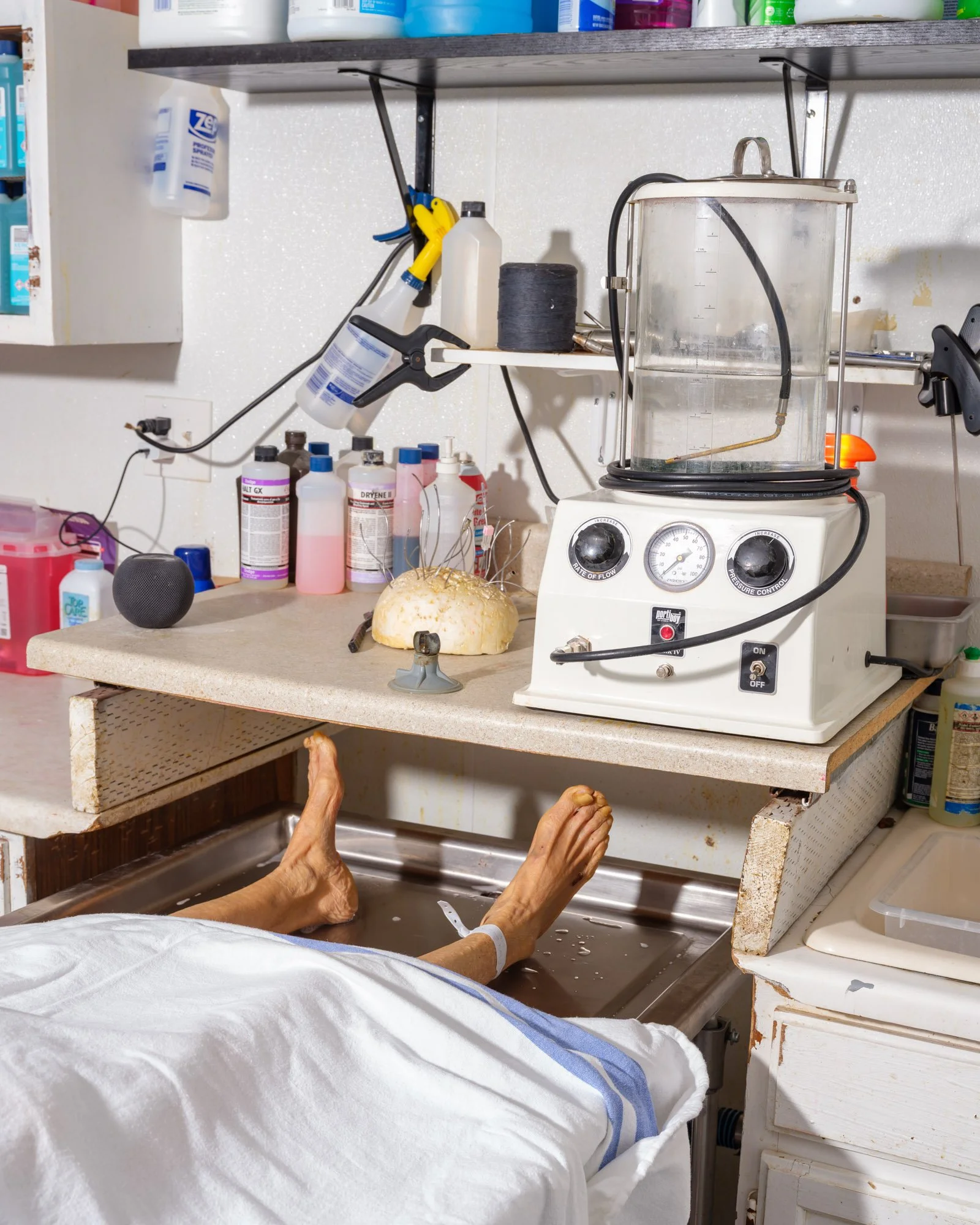
Equipment used in the embalming process. A small incision allows embalming fluid to replace the blood, slowing decay. The body is then washed, cosmetically prepared, dressed, and positioned for viewing.
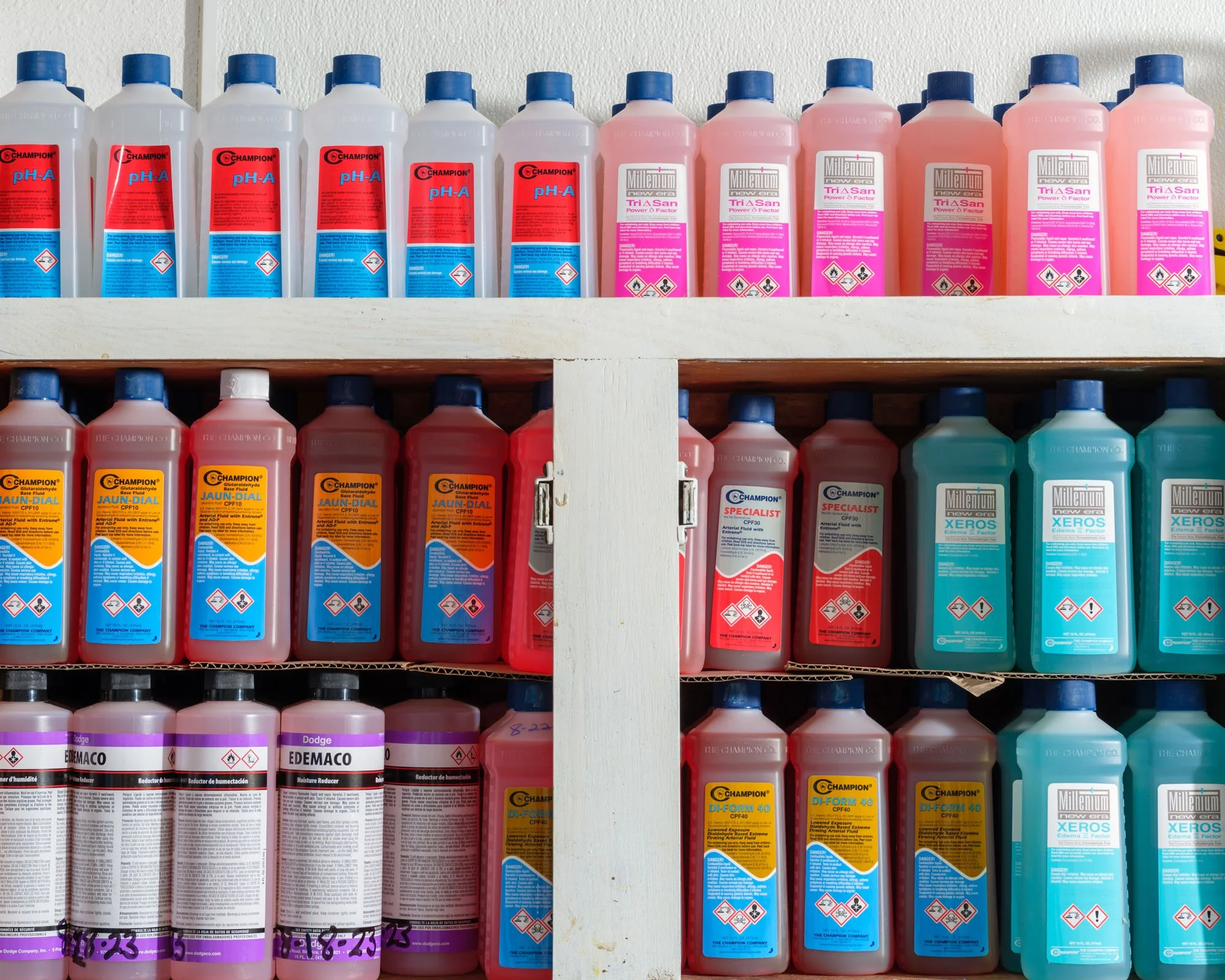
Chemicals and solutions used in the embalming process, in which blood is replaced by special fluids.
“It’s a little difficult for some new employees, but my staff understands that the mission is the family and trying to set everything up for them. So the focus has to be perfection and customer service, empathy, sympathy for the family. You’re there to answer any question, answer everything they want need to know, guide them. My policy is that if they call you at two o’clock in the morning, which I encourage families to do, you take the call and you answer it.”
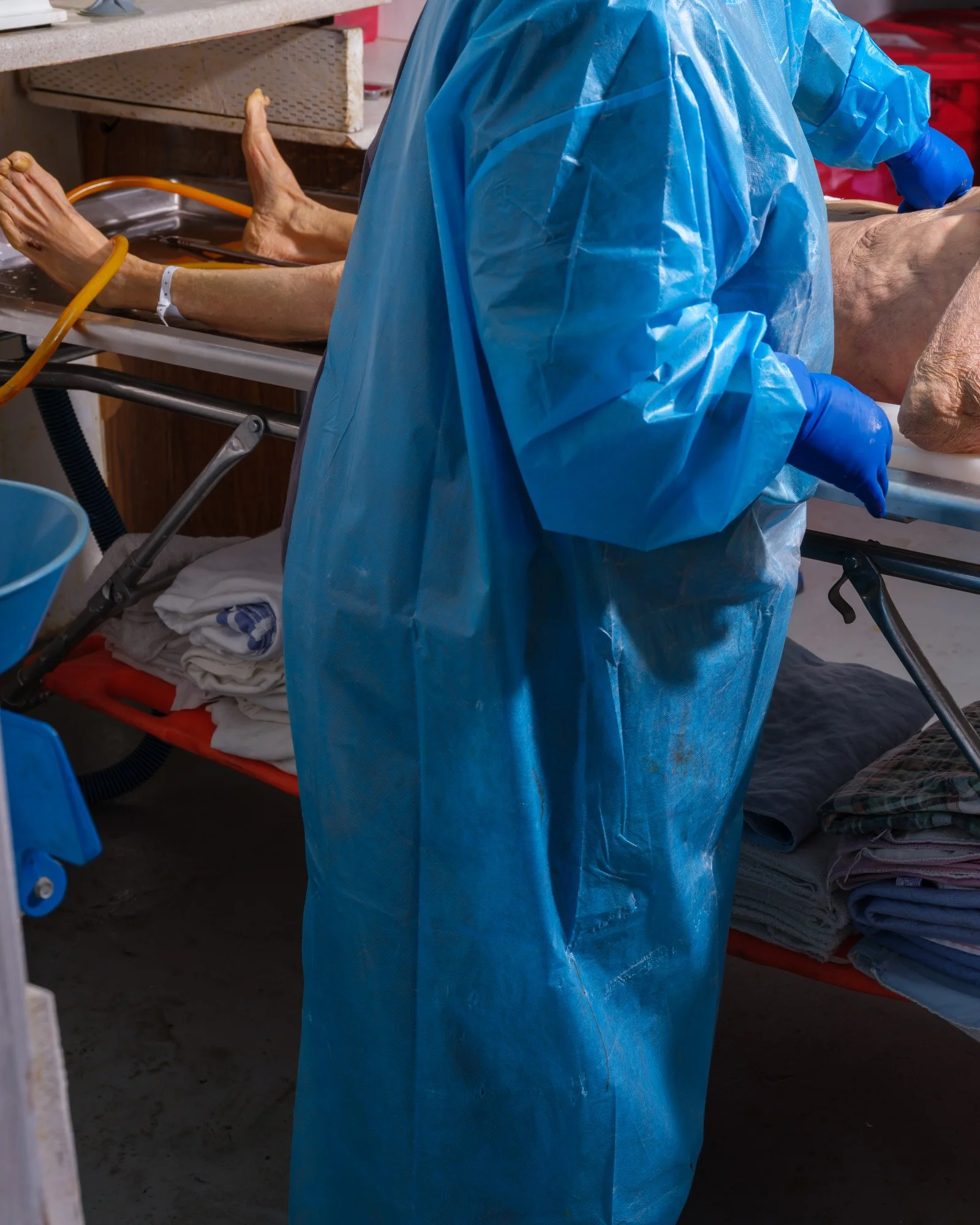
If there will be a viewing or visitation of the deceased, the body will usually be embalmed. If a person dies a natural deal, the embalming process takes around an hour. But if they have been involved in a car crash or a shooting for instance, they go to the county morgue and then have an autopsy. When they arrive at the funeral home, they can be in a bad state - there can be a lot of repair work to do.
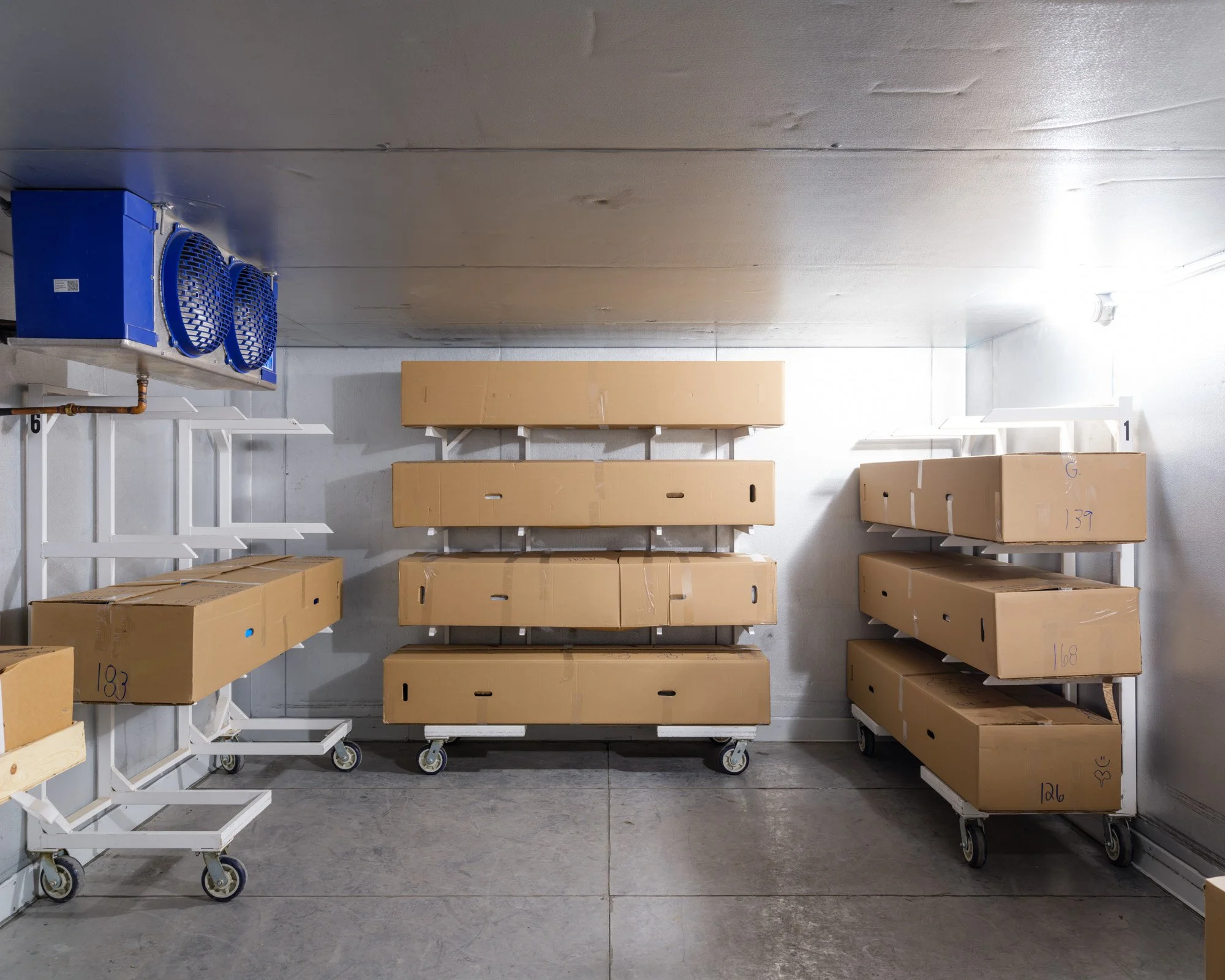
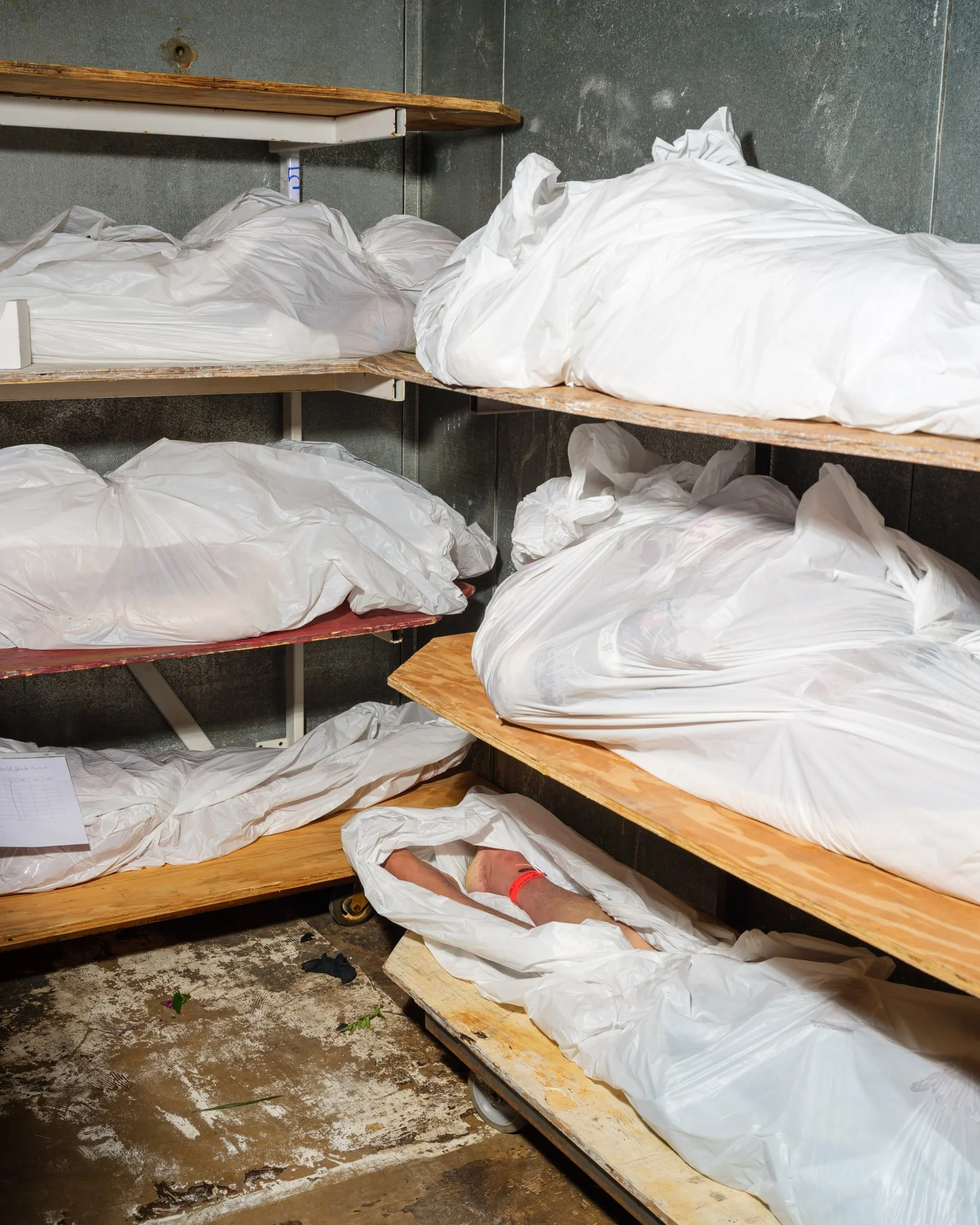
Bodies in the refrigerator at the crematory, awaiting cremation. Many choose to rent a coffin for the funeral, and then be cremated in a cardboard box due to the expense of coffins.
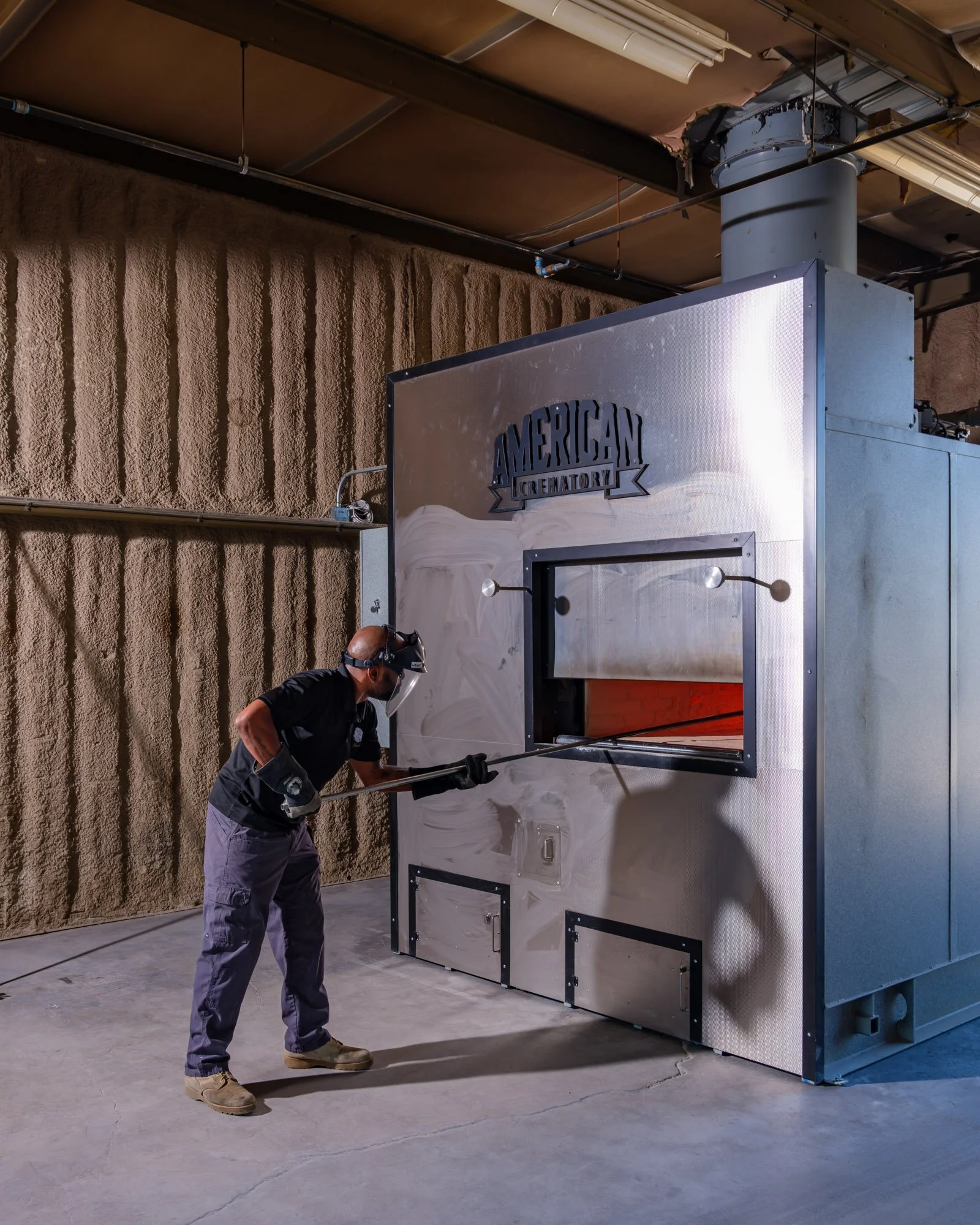
“When you’re processing someone, you can open the retort (oven) door and rearrange the individual inside the machine. The first time I did it, it was complete chaos and carnage on the inside of that retort, fire and flame and smoke; there’s a human corpse laying there on the bed of the machine. At this point in time, you have to make a decision. Whether you’re going to push forward and muscle through what you’re observing, or back down and say this isn’t for me. And what I saw didn’t budge me too much. I was experiencing something new for the first time. And this is a part of life.
I had individuals who trusted that I could take care of this challenge. And I made sure that the job was done as effectively as I could. And I guess you could say what I do is noble in giving someone’s family member their last request.
My sons know about what I do. They want to be cremated as well. I mean, I know they’re young, only 10 and 13. They want to mix my ashes with theirs when they pass so we can be together forever. I melted when they told me that.”
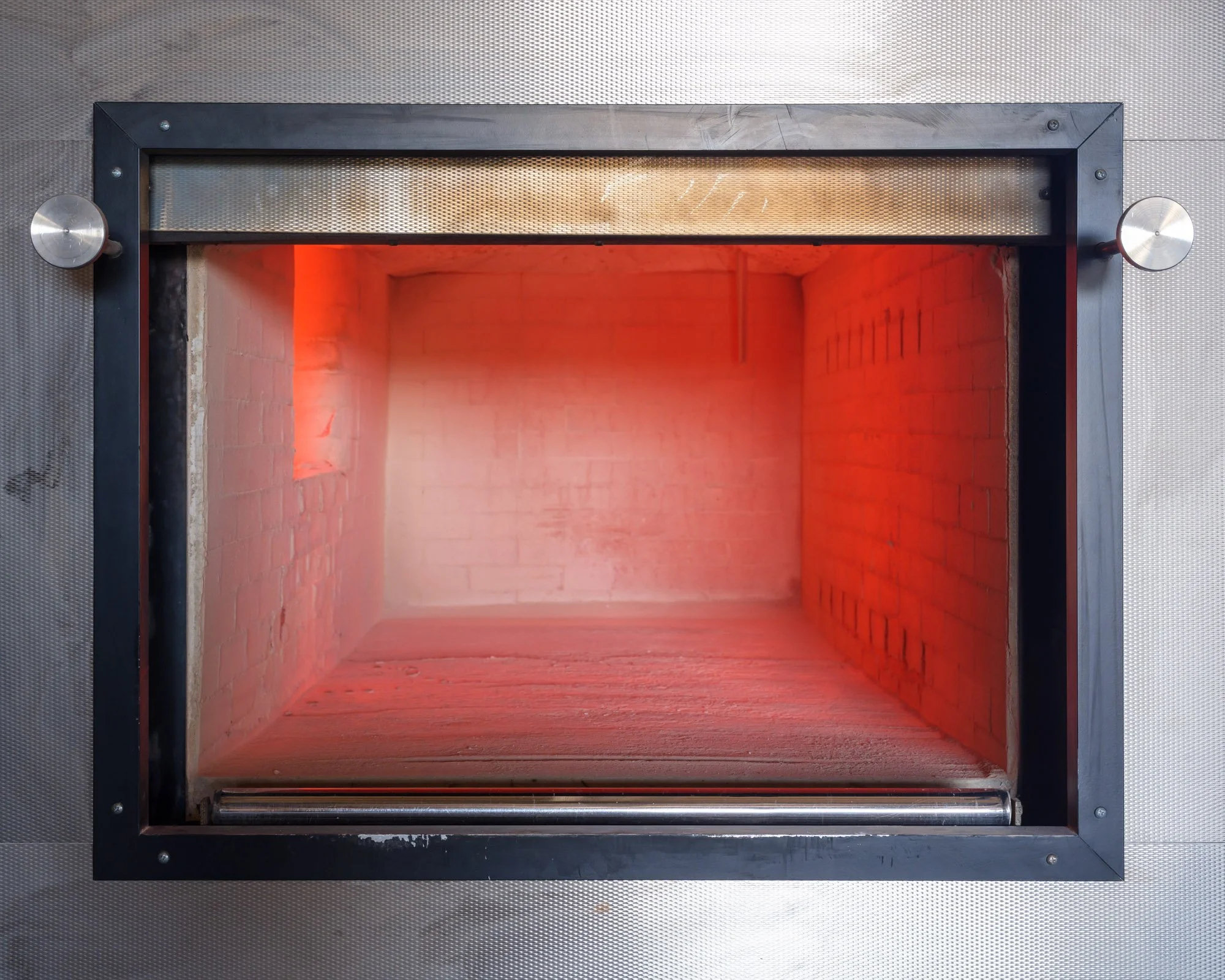
The oven at the crematory. Two ovens cremate approximately eight bodies per day. The amount of time it takes for a body to burn depends on weight and body composition, but usually takes between one and a half to three hours.
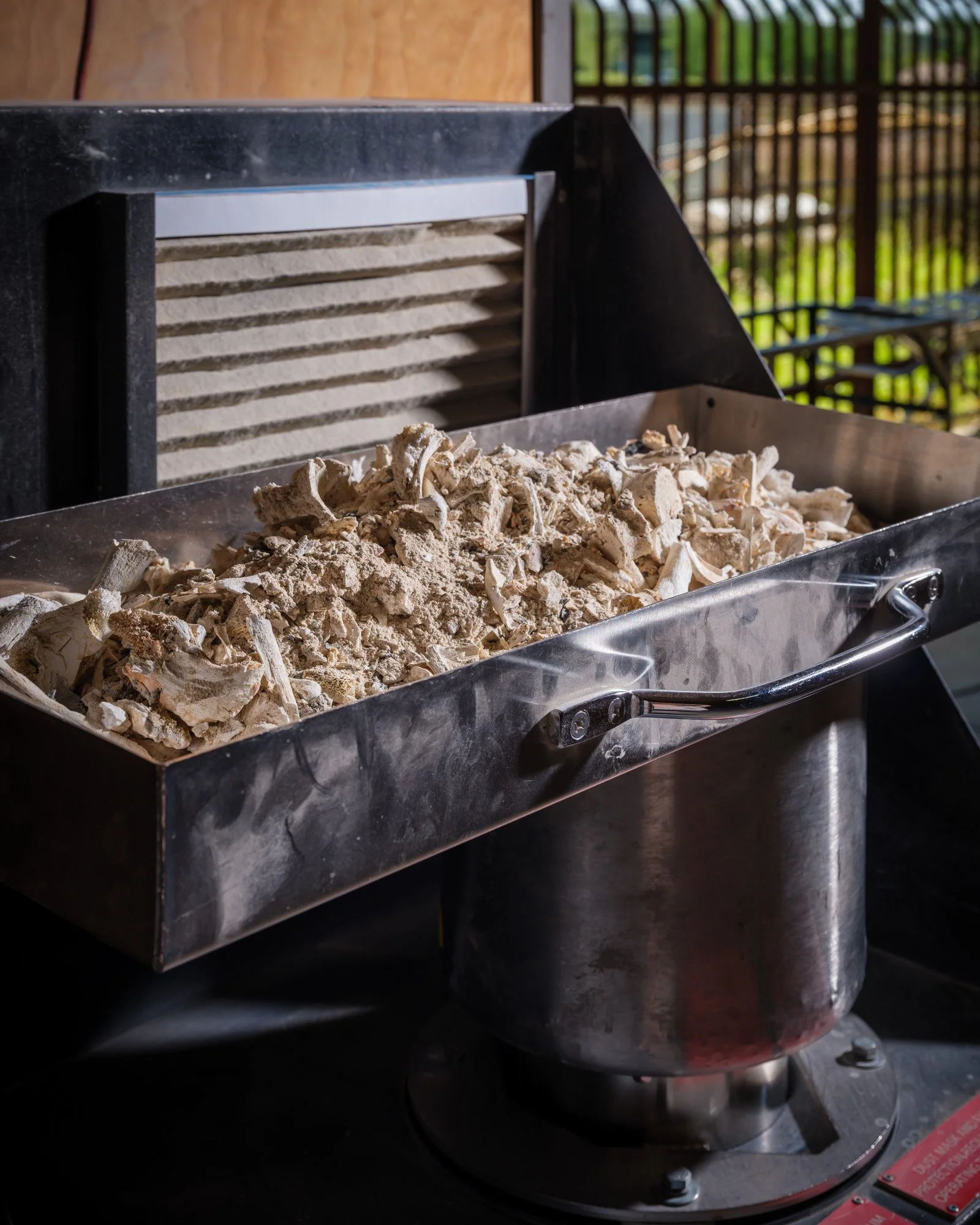
Ashes that have been removed from the retort before being placed in an urn.
“Once the bodies start to incinerate, you see a lot of things in there. You’re seeing the internal organs. You’re seeing the brain as it chars, seeing the kidneys, the heart, the liver. Oddly the thing that I still can’t understand is that the brain is the last thing that will burn in the machine. You can have flesh, everything gone, heart, organs, all gone. But the brain can sometimes be the last thing left in the machine.”